
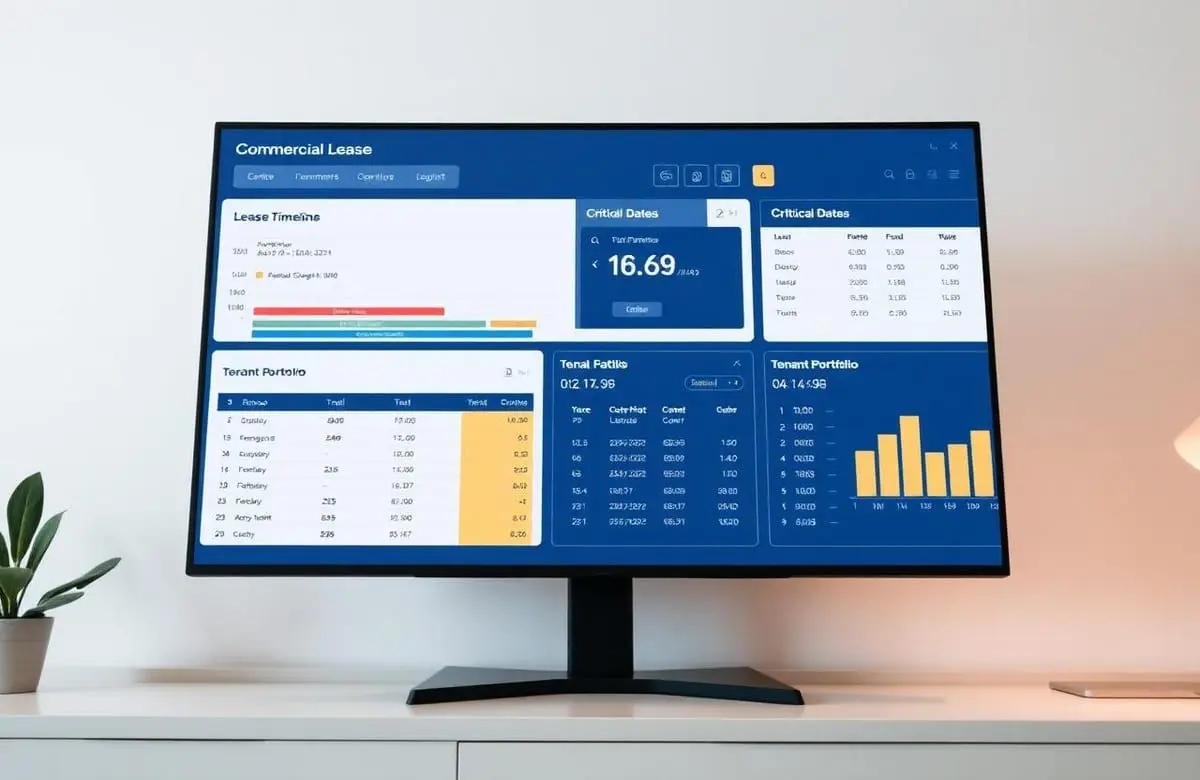
Real Estate Management Software That Actually Runs Your Portfolio
Most landlords and property managers are not short of tools. They have a spreadsheet for rent tracking, a personal inbox for tenant messages, a WhatsApp thread for contractor communication, and a calendar with compliance dates nobody checks consistently.
The problem is not a shortage of places to put information. The problem is that none of it connects. And when the operational layer of a rental portfolio runs on disconnected manual processes, the same failures happen on repeat. Maintenance requests go quiet between stages. Lease renewals sneak past. Rent follow-up happens when there is time rather than when it is needed. Compliance deadlines surface after they have already passed.
This is not poor management. It is what manual systems produce when the portfolio outgrows them.
Good real estate management software does not just organise this workload. It handles it. There is a meaningful difference between a platform that reminds you what needs doing and one that does it.
What Actually Goes Wrong Without the Right System
Communication falls through the cracks
Tenant messages arrive across phone, email, WhatsApp, and SMS simultaneously. Without a centralised system logging and responding to every channel, messages get missed during busy periods. Tenants who feel ignored escalate. Escalations take significantly more time to resolve than the original message would have required.
The cost shows up in two ways. Tenant turnover costs one to two months of rental income per unit in lost income and reletting costs according to Buildium research, and poor communication is consistently cited as a primary reason tenants do not renew. And in markets like NYC where tenants know their legal rights, an unanswered maintenance report does not just damage the relationship. It can trigger a formal complaint.
Landlord management software that handles every inbound message automatically removes the gap between when a tenant reaches out and when they get a response, regardless of the channel or the hour.
Maintenance stalls between stages and gets expensive
A maintenance request comes in. It gets noted. The contractor is contacted. The contractor responds slowly. The follow-up gets delayed. The tenant chases. The property manager reconstructs the status of a job from memory and a text thread.
Planned maintenance costs three to five times less per repair than reactive maintenance for equivalent building issues according to Plant Engineering Maintenance Survey data. The financial difference between catching a problem early and finding out about it after it has escalated is consistently the difference between a minor repair and a major one.
Residential property management software that runs the entire maintenance workflow automatically, from first report through contractor coordination to job completion logging, removes the manual gaps where requests stall and costs grow.
Lease obligations drift when nobody is watching them
Renewal dates, rent review windows, break clause periods. These are financially significant dates that require specific advance action. Tracking them across multiple concurrent tenancies through a shared calendar or spreadsheet is a system that works until it does not.
Consistent lease documentation reduces legal dispute costs by up to 30% according to Deloitte research. When lease management relies on manually entered summaries rather than the actual document, obligations get tracked incorrectly, amendments do not get reflected, and disputes arise from discrepancies between what the tenant understands they owe and what the system expects.
Property portfolio management software that reads actual lease documents removes this category of error entirely. Obligations are tracked from the source, not from an interpretation of it.
Compliance deadlines accumulate untracked
Safety certifications, inspection cycles, annual registration requirements, Local Law obligations. These apply per property and sometimes per unit. Without a system tracking each obligation individually, deadlines get missed during busy periods in ways that generate fines and legal exposure.
The property management solution that fixes this is not a reminder service. It is a system that knows what each property is obligated to do, when, and flags it with enough lead time to act rather than react.
What Good Real Estate Management Software Actually Does
It acts, not just organises
Most tools in this category are fundamentally passive. They store information, send reminders, display dashboards. They show you what needs doing. They do not do it.
AI-powered real estate portfolio management software changes this. Alice, Brickwise AI's AI property manager, handles every incoming message across phone, SMS, email, and WhatsApp simultaneously, responds immediately using property-specific data, and logs every exchange automatically. When a maintenance issue is reported she categorises urgency, contacts multiple contractors simultaneously rather than sequentially, chases non-responses, and keeps the tenant updated throughout. No manual input required at each stage.
This is the distinction that matters when evaluating AI property management software. The operational work runs rather than waits.
It connects every function into one system
The operational failures that compound in fragmented setups happen at the handoffs between disconnected tools. A maintenance request that does not link to the tenant's lease record. A rent reminder that does not reflect the review clause that just changed. A compliance deadline that lives in a separate calendar nobody synced.
Brickwise AI connects communication, maintenance, lease management, rent collection, and compliance tracking within one system. When a lease approaches renewal the communication goes out through the same channel handling daily tenant messages. When a rent review date passes the payment tracking reflects it automatically. Every function draws from the same property-level data rather than isolated records that drift apart.
For property management companies serving landlord clients, this integration is what makes consistent service delivery achievable across a large portfolio without expanding the team proportionally.
It builds the documentation that protects you
Housing court proceedings, HPD inspections, dispute resolution, financing due diligence. All of these depend on having a complete, timestamped record of what happened, when, and who was informed.
Every property in Brickwise AI carries a complete digital profile: lease documents, maintenance history, compliance certificates, contractor records, payment history, and correspondence all stored against the correct property automatically. When documentation is needed it is already assembled. Nothing depends on a team member's inbox or memory.
As residential property management software for growing operations, this centralised record-keeping is what turns a portfolio into a professionally managed asset base rather than a collection of individually managed properties.
The Numbers
- Landlords spend an average of 6 hours per week per property on operational tasks without dedicated systems (NARPM)
- Planned maintenance costs three to five times less than reactive repairs for equivalent issues (Plant Engineering)
- Tenant turnover costs one to two months of rental income per unit in lost income and reletting (Buildium)
- Consistent lease documentation reduces legal dispute costs by up to 30% (Deloitte)
- Over 50% of self-managing landlords say administrative burden limits portfolio growth (NRLA)
- The global property management software market reached $26.55 billion in 2025 and is projected to reach $52.21 billion by 2032 (Fortune Business Insights)
Who This Is Built For
Self-managing landlords currently running operations through personal email, spreadsheets, and separate apps. The immediate gain is time. The longer-term gain is a portfolio that runs consistently without the operational load sitting entirely on one person.
Portfolio investors in growth mode who have reached the point where management complexity is slowing acquisition decisions. The right property management solution absorbs the operational load of new properties without requiring new hires to absorb it.
Property management companies serving external landlord clients who need consistent, documented service delivery across every property. AI automation makes that standard achievable at scale without growing the team at the same rate as the managed portfolio.
Pricing
Brickwise AI starts at $4 per tenant per month. For operators currently spending 6 hours a week per property on manual operational tasks, the time recovered in the first month exceeds the annual cost across a ten-property portfolio. See full plan details on the pricing page.
Frequently Asked Questions
How is real estate management software different from generic accounting or project tools?
Generic tools require significant customisation and still lack the domain-specific functions property management requires. Purpose-built rental property management software handles tenant communication, maintenance coordination, lease tracking, and compliance management as integrated core functions rather than workarounds built on tools designed for different purposes.
When does a landlord actually need dedicated management software?
Most operators start feeling the limitations of manual management between three and five properties. Communication volume, maintenance coordination, and lease tracking across multiple concurrent tenancies is where improvised systems begin creating errors and missed obligations that dedicated software prevents.
How does AI handle maintenance differently from a standard ticketing system?
A ticketing system records the request and waits for human action. AI-powered property portfolio management software actively coordinates the resolution: triaging urgency, contacting multiple contractors simultaneously, chasing non-responders, updating the tenant throughout, and closing the record on completion. The operational work runs without manual input at every stage.
What happens to property records if management responsibilities change hands?
Brickwise AI stores every record against individual properties rather than user accounts. The full history transfers seamlessly when team members change. No institutional knowledge disappears with a departing staff member.
Is this cost-effective for smaller portfolios?
At $4 per tenant per month Brickwise AI works at any portfolio size. For smaller portfolios the value comes from time recovery and compliance risk reduction. For larger portfolios the dominant case is consistent operational standards across every property without proportional staffing increases.
Does Brickwise AI integrate with existing property management systems?
Yes. Brickwise AI integrates with major CRMs and property management platforms. Communication logs, maintenance records, and lease data sync automatically across connected systems.
Related Resources
- NYC-specific operators: landlord compliance software for NYC
- Portfolio-wide visibility: AI property reporting software
- Regulatory reading on Fair Housing Act compliance
- Accessibility obligations: ADA compliance for rental properties
